

Authored By: Mohamed Seif Abaza, VP of Commissioning and Sustainability Services
Driving Performance, Sustainability, and Long-Term Value
As the built environment continues to evolve, Net Zero Energy Buildings (NZEBs) are emerging as the new benchmark for sustainable design and high-performance engineering. Once viewed as an ambitious idea, net zero strategies are now central to how organizations approach energy use, resilience, and long-term asset value. For companies focused on operational excellence, Environmental, Social, and Governance (ESG) commitments, and cost control; net zero has shifted from a visionary goal to a strategic imperative.
What is a Net Zero Energy Building?
A Net Zero Energy Building is engineered to minimize energy demand and produce enough renewable energy to offset its annual consumption. In practice, this means that over the course of a year: Energy Consumed = Energy Produced
Achieving this balance requires a combination of high-performance building envelopes, advanced HVAC technologies, intelligent controls, and onsite renewable energy generation-most commonly through solar photovoltaics. Together, these systems create a building that is both energy efficient and energy responsible.
The Core Pillars of Net Zero Design
Ultra Efficient Building Envelope:
The foundation of any NZEB is an envelope designed to drastically reduce heating and cooling loads. Continuous insulation, high-performance glazing, air barrier commissioning, and minimized thermal bridging all work together to keep conditioned air inside and external conditions out. Reducing loads at the envelope level is far more cost-effective than compensating with oversized mechanical systems.
Electrification and High-Efficiency HVAC:
To eliminate reliance on fossil fuels, NZEBs increasingly adopt all-electric mechanical systems such as air-source or ground-source heat pumps, VRF/VRV systems, Dedicated Outdoor Air Systems (DOAS), and Energy Recovery Ventilators (ERV). Electrification not only improves efficiency but also aligns buildings with the broader decarbonization of the electrical grid.
Smart Controls and Energy Monitoring:
Modern Building Automation Systems provide real-time insight into energy performance, enabling demand response, load optimization, and early dedication of system faults. Transparent, continuous monitoring ensures that buildings operate as designed.
Renewable Energy Integration:
Most NZEBs rely on rooftop solar arrays, solar canopies, community solar programs, or battery storage. Renewable systems are sized based on modeled Energy Use Intensity (EUI) targets, ensuring that annual production meets or exceeds annual demand.
Why Net Zero Matters!
Financial Advantages
Net zero buildings offer long-term operational savings, insulation from energy price volatility, and increased asset value. Many projects also qualify for incentives such as the 179D tax deduction, improving the financial return on investment.

Environmental Impact
By reducing or eliminating carbon emissions, NZEBs support municipal climate action plans and align with state and federal decarbonization mandates. They represent a tangible step toward a low-carbon future.

Market and Tenant Demand
Investors and tenants increasingly prioritize ESG-aligned properties. NZEBs offer healthier indoor environments, lower operating costs, and a competitive market advantage.

Net Zero vs. LEED
While LEED certification evaluates a broad spectrum of sustainability metrics, Net Zero Energy focuses specifically on achieving an annual energy balance. A building may be LEED Certified without being net zero, net zero without being LEED Certified, or more commonly today, both.
Challenges and the Path to Success
Reaching net zero requires early-stage integrated design, detailed energy modeling, envelope testing, lifecycle cost analysis, and strong owner engagement. Late-stage design changes can jeopardize energy targets, making collaboration essential from the outset.
Commissioning plays a critical role in verifying that systems operate as intended, controls are optimized, and envelope performance meets air leakage requirements. Without rigorous commissioning, net zero remains a design aspiration rather than an operational reality.
Looking Ahead
Institutions such as the National Renewable Energy Laboratory (NREL) have demonstrated that net zero performance is achievable at scale, inspiring municipalities to adopt performance standards that align with net zero trajectories. As these policies expand, NZEBs are becoming a mainstream expectation rather than an exception, signaling a clear shift in how the built environment defines high performance.
Building on this momentum, the industry is now moving beyond Net Zero Energy toward Net Zero Carbon, grid-interactive efficient buildings, electrified district energy systems, and performance-based energy codes. These advancements signal a future where net zero is not merely a sustainability milestone but the baseline for responsible development and long-term resilience.
Within this evolving landscape, Net Zero Energy Buildings represent the intersection of engineering excellence, financial intelligence, and environmental stewardship. Whether constructing new facilities or modernizing existing ones, the path to net zero begins with benchmarking current performance, setting ambitious yet achievable EUI targets, prioritizing efficiency before renewables, and verifying performance through commissioning. The buildings of the future will not only use less energy, they will use energy wisely.

Salisbury University Net Zero Master Plan
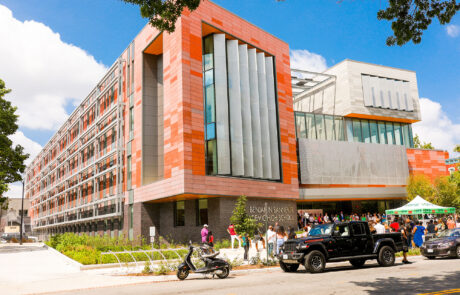
Banneker High School
Examples of Net Zero Projects
Across the country, a growing number of projects are demonstrating what Net Zero performance looks like in practice. One example is Salisbury University’s Net Zero Master Plan in Salisbury, Maryland, developed with support from Allen + Shariff Corporation to establish a comprehensive roadmap for campus-wide decarbonization. Banneker High School in Washington, DC is another standout project – a Net Zero-ready facility recognized for its innovative approach to energy performance, as highlighted in an industry case study by MCN Build.
The following examples are part of a broader national movement toward high-performance, low-carbon buildings. In the commercial sector, the Walgreens Net Zero Store in Evanston, Illinois, shows how retail spaces can pair deep efficiency with onsite renewables. Residential and community projects like the Geos Neighborhood in Arvada, Colorado, demonstrate how entire communities can operate at or near Net Zero. In the institutional sector, the Environmental Nature Center Preschool in Newport Beach, California, highlights how high-performance design can elevate civic and educational facilities. Federal and state initiatives – particularly in California, Massachusetts, Oregon, and Washington – are accelerating this momentum by setting Net Zero and decarbonization targets for public buildings. Together, these efforts show how Net Zero strategies are taking hold across building types and regions, shaping the next generation of high-performance development.
Authored By: Mohamed Seif Abaza, VP of Commissioning and Sustainability Services
Driving Performance, Sustainability, and Long-Term Value
As the built environment continues to evolve, Net Zero Energy Buildings (NZEBs) are emerging as the new benchmark for sustainable design and high-performance engineering. Once viewed as an ambitious idea, net zero strategies are now central to how organizations approach energy use, resilience, and long-term asset value. For companies focused on operational excellence, Environmental, Social, and Governance (ESG) commitments, and cost control; net zero has shifted from a visionary goal to a strategic imperative.
What is a Net Zero Energy Building?
A Net Zero Energy Building is engineered to minimize energy demand and produce enough renewable energy to offset its annual consumption. In practice, this means that over the course of a year: Energy Consumed = Energy Produced
Achieving this balance requires a combination of high-performance building envelopes, advanced HVAC technologies, intelligent controls, and onsite renewable energy generation-most commonly through solar photovoltaics. Together, these systems create a building that is both energy efficient and energy responsible.
The Core Pillars of Net Zero Design
Ultra Efficient Building Envelope:
The foundation of any NZEB is an envelope designed to drastically reduce heating and cooling loads. Continuous insulation, high-performance glazing, air barrier commissioning, and minimized thermal bridging all work together to keep conditioned air inside and external conditions out. Reducing loads at the envelope level is far more cost-effective than compensating with oversized mechanical systems.
Electrification and High-Efficiency HVAC:
To eliminate reliance on fossil fuels, NZEBs increasingly adopt all-electric mechanical systems such as air-source or ground-source heat pumps, VRF/VRV systems, Dedicated Outdoor Air Systems (DOAS), and Energy Recovery Ventilators (ERV). Electrification not only improves efficiency but also aligns buildings with the broader decarbonization of the electrical grid.
Smart Controls and Energy Monitoring:
Modern Building Automation Systems provide real-time insight into energy performance, enabling demand response, load optimization, and early dedication of system faults. Transparent, continuous monitoring ensures that buildings operate as designed.
Renewable Energy Integration:
Most NZEBs rely on rooftop solar arrays, solar canopies, community solar programs, or battery storage. Renewable systems are sized based on modeled Energy Use Intensity (EUI) targets, ensuring that annual production meets or exceeds annual demand.
Why Net Zero Matters!
Financial Advantages
Net zero buildings offer long-term operational savings, insulation from energy price volatility, and increased asset value. Many projects also qualify for incentives such as the 179D tax deduction, improving the financial return on investment.
Environmental Impact
By reducing or eliminating carbon emissions, NZEBs support municipal climate action plans and align with state and federal decarbonization mandates. They represent a tangible step toward a low-carbon future.
Market and Tenant Demand
Investors and tenants increasingly prioritize ESG-aligned properties. NZEBs offer healthier indoor environments, lower operating costs, and a competitive market advantage.
Net Zero vs. LEED
While LEED certification evaluates a broad spectrum of sustainability metrics, Net Zero Energy focuses specifically on achieving an annual energy balance. A building may be LEED Certified without being net zero, net zero without being LEED Certified, or more commonly today, both.
Challenges and the Path to Success
Reaching net zero requires early-stage integrated design, detailed energy modeling, envelope testing, lifecycle cost analysis, and strong owner engagement. Late-stage design changes can jeopardize energy targets, making collaboration essential from the outset.
Commissioning plays a critical role in verifying that systems operate as intended, controls are optimized, and envelope performance meets air leakage requirements. Without rigorous commissioning, net zero remains a design aspiration rather than an operational reality.
Looking Ahead
Institutions such as the National Renewable Energy Laboratory (NREL) have demonstrated that net zero performance is achievable at scale, inspiring municipalities to adopt performance standards that align with net zero trajectories. As these policies expand, NZEBs are becoming a mainstream expectation rather than an exception, signaling a clear shift in how the built environment defines high performance.
Building on this momentum, the industry is now moving beyond Net Zero Energy toward Net Zero Carbon, grid-interactive efficient buildings, electrified district energy systems, and performance-based energy codes. These advancements signal a future where net zero is not merely a sustainability milestone but the baseline for responsible development and long-term resilience.
Within this evolving landscape, Net Zero Energy Buildings represent the intersection of engineering excellence, financial intelligence, and environmental stewardship. Whether constructing new facilities or modernizing existing ones, the path to net zero begins with benchmarking current performance, setting ambitious yet achievable EUI targets, prioritizing efficiency before renewables, and verifying performance through commissioning. The buildings of the future will not only use less energy, they will use energy wisely.
Salisbury University Net Zero Master Plan
Banneker High School
Examples of Net Zero Projects
Across the country, a growing number of projects are demonstrating what Net Zero performance looks like in practice. One example is Salisbury University’s Net Zero Master Plan in Salisbury, Maryland, developed with support from Allen + Shariff Corporation to establish a comprehensive roadmap for campus-wide decarbonization. Banneker High School in Washington, DC is another standout project – a Net Zero-ready facility recognized for its innovative approach to energy performance, as highlighted in an industry case study by MCN Build.
The following examples are part of a broader national movement toward high-performance, low-carbon buildings. In the commercial sector, the Walgreens Net Zero Store in Evanston, Illinois, shows how retail spaces can pair deep efficiency with onsite renewables. Residential and community projects like the Geos Neighborhood in Arvada, Colorado, demonstrate how entire communities can operate at or near Net Zero. In the institutional sector, the Environmental Nature Center Preschool in Newport Beach, California, highlights how high-performance design can elevate civic and educational facilities. Federal and state initiatives – particularly in California, Massachusetts, Oregon, and Washington – are accelerating this momentum by setting Net Zero and decarbonization targets for public buildings. Together, these efforts show how Net Zero strategies are taking hold across building types and regions, shaping the next generation of high-performance development.